

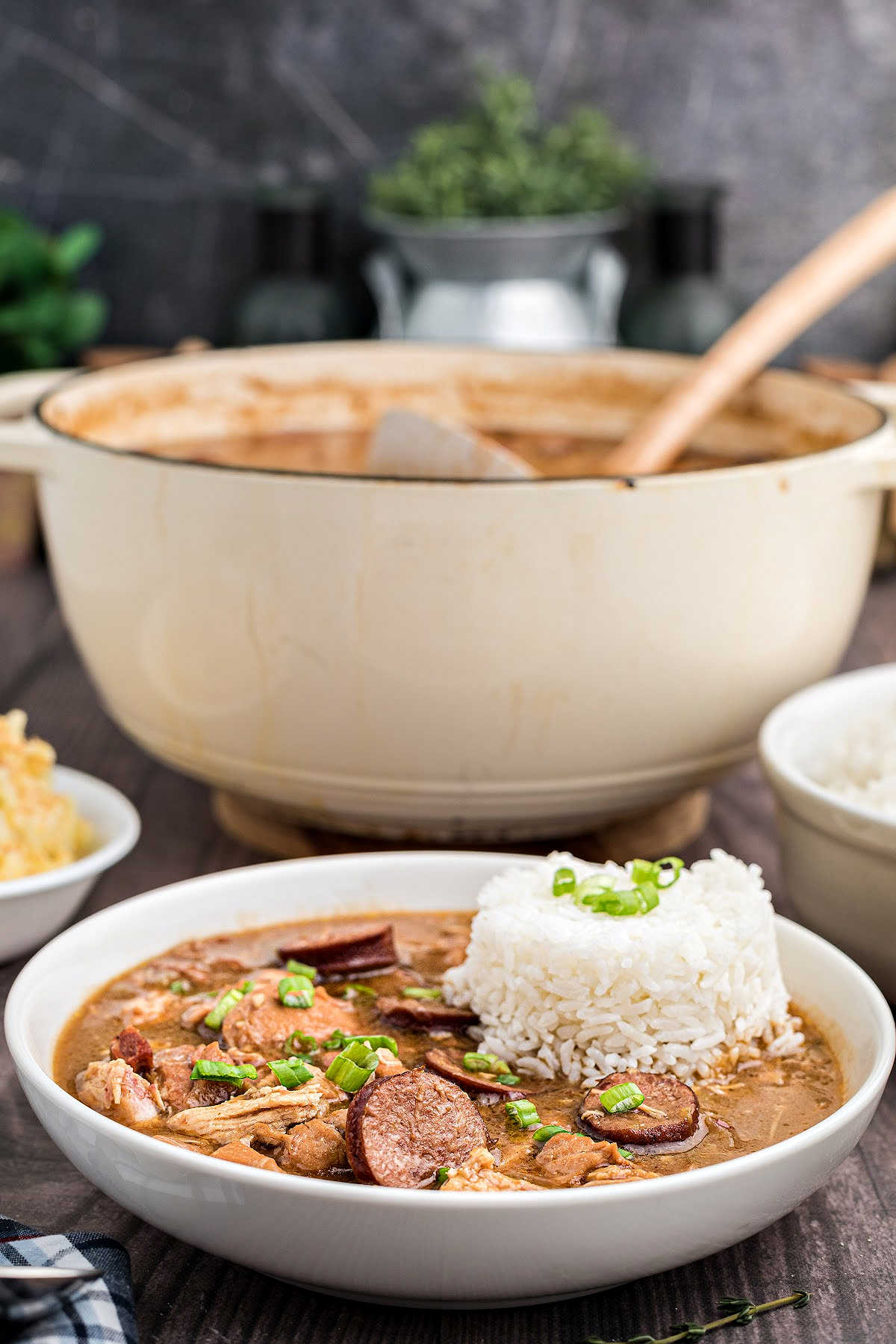
Gumbo is a hearty Louisiana stew, built on the foundation of a deliciously dark roux, and the "holy trinity" of onions, bell peppers and celery. It's cooked low and slow over hours and is almost always served over rice, and could have a variety of different proteins - the most popular being seafood or chicken. It's the cornerstone of Louisiana cooking, cooked differently in each kitchen and passed down through generations.
The History of Gumbo: A True Melting Pot
Gumbo has a long history, and it comes from many different cultures being mixed together, right here in Louisiana. Back in the 1700s, West African, Native American, and French cooking styles all came together to help create the gumbo we know today. The word "gumbo" is believed to come from the West African word "ki ngombo", which literally means okra. Enslaved West African people brought okra with them, and they used it to help thicken the dish. Without their influence, gumbo would not be what it is today.
Native Americans added filé powder, which is made from ground sassafras leaves. It helped thicken gumbo and became an important part of Louisiana cooking. The French brought the idea of making a roux, which is the rich base used in many soups and stews. Over time, Spanish, German, and Creole cooking styles also became part of the dish as more people settled in Louisiana. In the end, gumbo became a mix of many cultures and traditions - a dish that truly belongs to Louisiana.
Today, gumbo is still one of the most loved and personal dishes in Louisiana. Ask ten people how to make gumbo, and you'll probably get ten different answers. And every single one of them will swear theirs is the best way. That's just how it's always been done down here. Every family's gumbo recipe has been passed down over the years, with little changes made along the way based on what they had, what they could afford, and what tasted like home to them.
What Is Gumbo?
The Holy Trinity
Much similar to a French Mirepoix, in Louisiana we start our dishes with onions, green bell pepper and celery. Named the holy trinity because Cajun cooking is like a religion and these three ingredients are the foundation.
Some people might not know this, but we also call the garlic, the "pope". Probably because of the shape of a bulb of garlic... as well as its relation to the "holy trinity".

The Thickening Agents
- Roux - equal parts (or there abouts) fat and flour, cooked over a low heat until a desired color is reached.
- Okra - Many people feel a gumbo is just not a gumbo without okra. Okra contains a gelatin like substance that helps thicken soups and stews. If not cooked correctly it can be quite slimy, so a lot of folks don't always like okra.
- Filé (Sassafras) - it's a powder seasoning made from the leaves of the sassafras plant.
The Foundation: The Roux
In our Cajun gumbos, we mostly use a nice dark roux. It adds such a beautiful depth of flavor and is definitely missed when eating the other versions that do not use a roux. You need a lot of patience though.
There are different color stages of making a roux. From blond, to peanut butter, to milk chocolate to dark chocolate. For more in-depth instructions on how to make a roux, follow this link to a post I have dedicated to all things roux.

Essential Gumbo Cooking Tips
The Stock
I firmly believe in making a homemade stock. I know this is not always possible/efficient - but I can promise you, there's no better flavor than making it homemade. For any chicken based gumbo I use my homemade Rotisserie Chicken Bone Broth. It's so easy to make and is such a great way to use ALL your leftovers.
For a seafood broth, I use the peelings from shrimp and crabs and any seafood in fact. Keep a resealable bag in the freezer and just keep adding to it as you have discard from cooking, add to the bag. You won't believe the flavors making a homemade stock (or broth) like this.
The Skim
It's common for there to be a layer of oil / grease on the top of the gumbo. It's super easy to get rid of this. Just use a ladle and slowly skim from the top until it's mostly gone. Also, see note below;
The Resting Period
Gumbo is one of those dishes that just tastes magically better the next day. Also, once refrigerated any grease remaining will solidify and can be removed before reheating.
Types of Gumbo
| Classic Seafood Gumbos | Louisiana Seafood Gumbo Cajun Crawfish Gumbo Shrimp and Redfish Gumbo Shrimp and Okra Gumbo |
| Traditional Meat and Poultry Gumbos | Chicken and Sausage Gumbo Turkey and Andouille Gumbo Beef Gumbo Andouille and Chicken Gumbo |
| Unique Wild Game Gumbos | Alligator Gumbo Poule D'Eau Gumbo (Duck) |
| Modern and Easy Gumbos | Slow Cooker Gumbo |


Alligator Gumbo


Seafood Gumbo


Beef Gumbo

Cajun vs. Creole Gumbo: What's the difference?
This is kind of a controversial topic in Louisiana, about whether or not tomatoe belong in a gumbo. Down the bayou (where we live in Terrebonne Parish) we say absolutely not, but it is more Cajun-country here. More in New Orleans you'll find a Creole way of cooking and tomatoes tend to be included.

Creole cooking has more Spanish influences (like the tomatoes). Whereas Cajun cooking is more influenced by the French-Acadian and Native American people...built on resourcefulness.
How To Serve Gumbo?
Traditional Louisiana gumbo is a heavy meal on its own, usually served over a scoop of fluffy white rice. However, if you are looking to round out your dinner table, these are the classic pairings:
- Cajun Potato Salad: Traditionally scooped right into the gumbo bowl!
- Crusty French Bread: Perfect for soaking up the remaining broth.
- Sweet Southern Cornbread: A classic sweet-and-savory balance.
I have a full post dedicated to all the side dishes that can be served with a good pot of gumbo - find it here: What To Serve With Gumbo.
FAQs About Gumbo
The signature flavor of gumbo comes from a combination of a slow-cooked dark roux, the "holy trinity" of vegetables (onions, celery, and bell pepper), and traditional Louisiana spices like cayenne pepper, thyme, and bay leaves.
Gumbo becomes slimy when okra is added incorrectly. To prevent this, sauté your okra in a separate pan with a little oil or vinegar to cook out the "slime" before adding it to your main gumbo pot. Alternatively, use a dark roux or filé powder as your primary thickeners instead of okra.
The main difference is how the rice is served. Gumbo is a thin, broth-like stew served over separately cooked white rice. Jambalaya is a rice-based, one-pot dish where the rice cooks directly in the broth with the meats and vegetables, absorbing all the liquid (much like paella).
No, never add filé powder while the gumbo is boiling, or it will become stringy and tough. Turn off the heat entirely before stirring it in, or place the filé shaker on the dinner table so guests can sprinkle it directly onto their individual bowls.
Yes, gumbo freezes beautifully for up to three months in airtight containers. However, you should always freeze the gumbo base by itself. Do not freeze it with rice mixed in, as the rice will absorb the liquid and turn mushy when thawed.


Comments
No Comments